Luca Moretti · one-on-one math tutoring · Cranford, NJ and online

The gap is almost never in this week’s chapter.

The break is usually a year or two back, and that is where we start. For students who need it, I build a full curriculum around them: adaptive, at their pace, from Algebra 1 through college math, built on their actual course rather than tonight’s assignment.

C→Aletter-grade jumps
in school math
13courses, Algebra 1
to college math
100+students taught
one-on-one
1 on 1every session,
taught by me

It doesn’t end when the hour ends.

Most tutoring stops when the session does. Here the week keeps going: office hours every week, homework sent straight to me, a written recap after every session and an update home every week, all in your student’s own portal.

Sessions

Every session, with me.

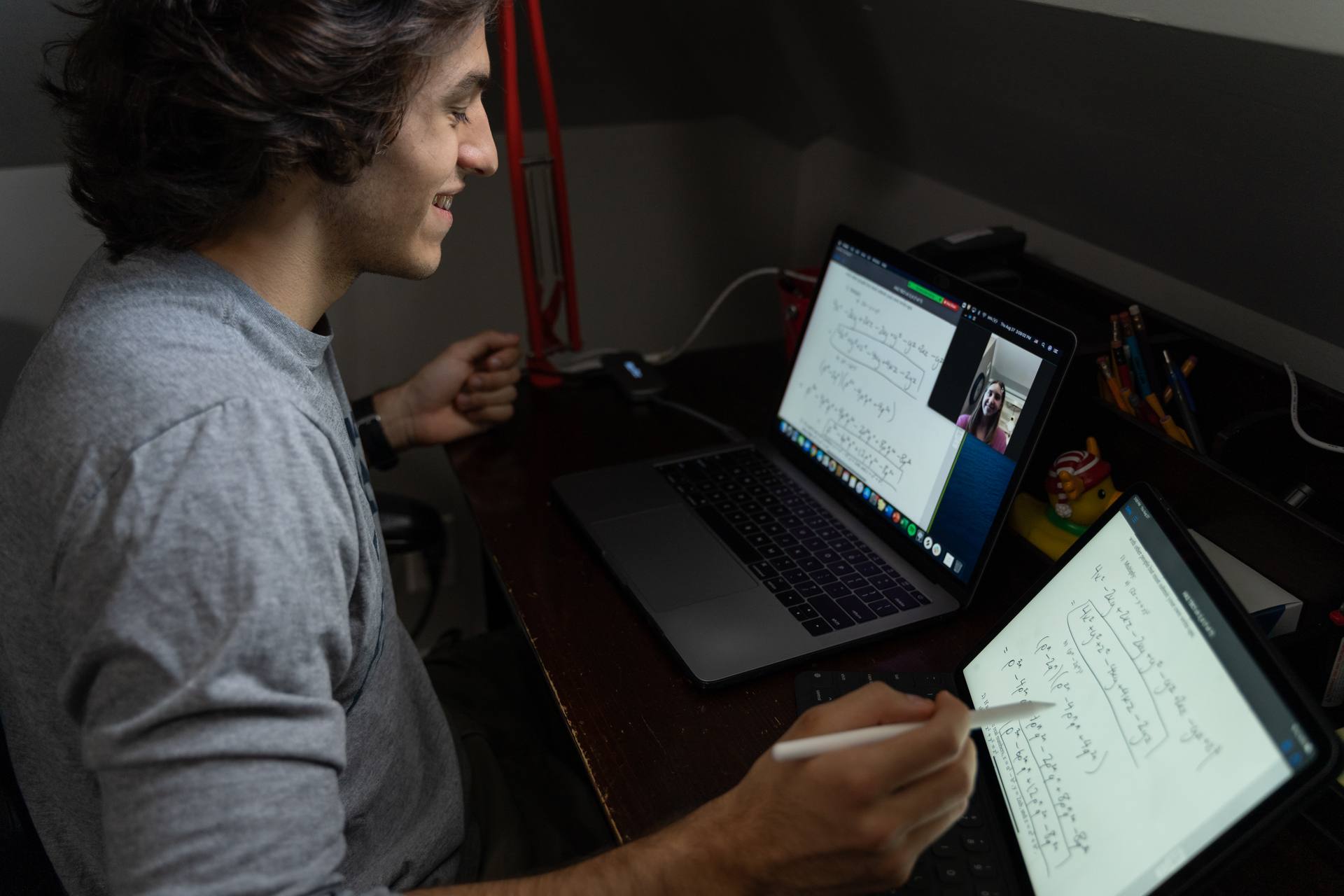
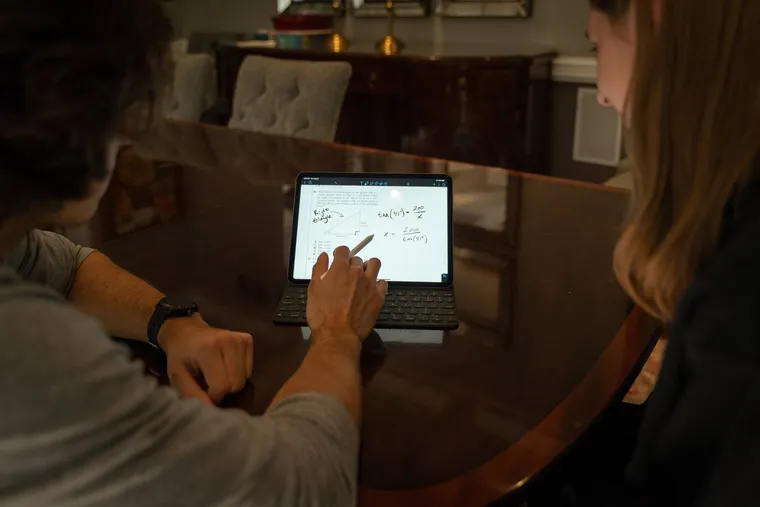
One-on-one every week, online or at the Cranford Public Library. The first sessions find where the foundation broke, and every session after builds from there.

Northwestern University, B.A. Statistics · 5 on AP Calculus AB & BC · teaching one-on-one since 2018

Luca Moretti

Home

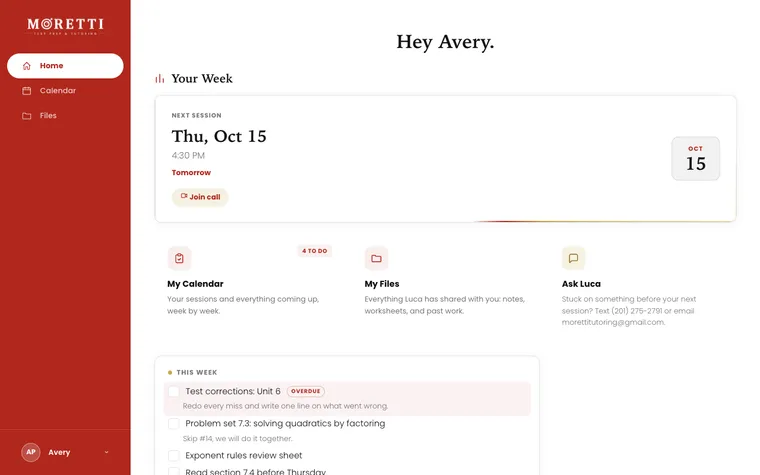
The whole week, at a glance.

The next session with its call link, office hours, this week’s homework as a checklist, and everything I’ve shared, the moment a student signs in.

Office hours

Stuck on homework? Drop in.

Every week I hold office hours open to every student. They sit on Home and on the calendar with the call link. Bring the problem you are stuck on, no appointment needed.

Calendar

Sessions and homework, on one calendar.

Every session and every assignment, by month or by week, so nothing due sneaks up on anyone.

Send your work

Homework to me, in two taps.

A photo of the homework or a test that came back, with a note on what was hard. It goes into their folder and reaches me before the next session, so we start on exactly what went wrong.

Session recaps

Every session, written down.

What we covered and what to practice before next time, on Home after every session, with every past recap one tap away.

Weekly updates

You always know how it’s going.

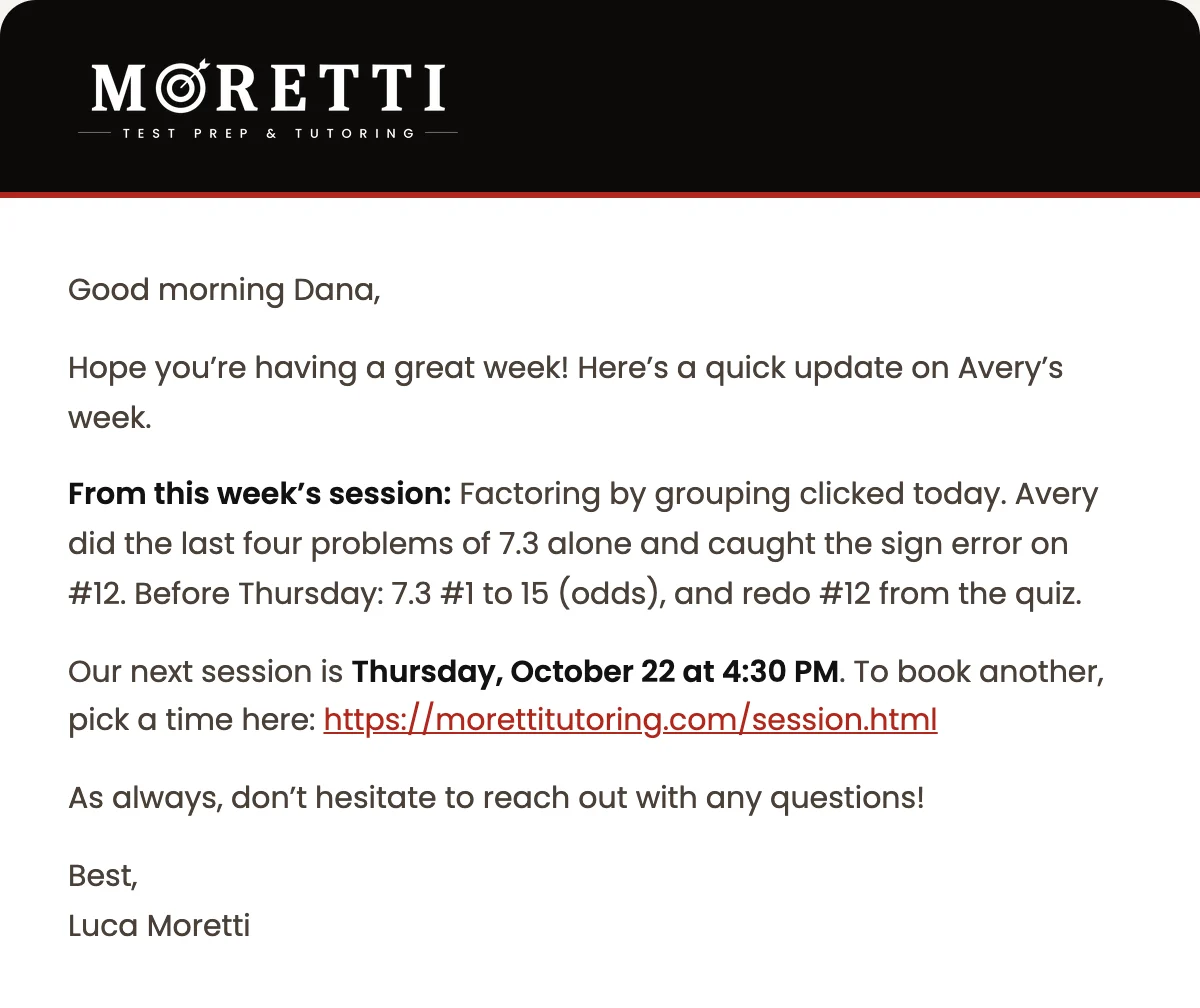
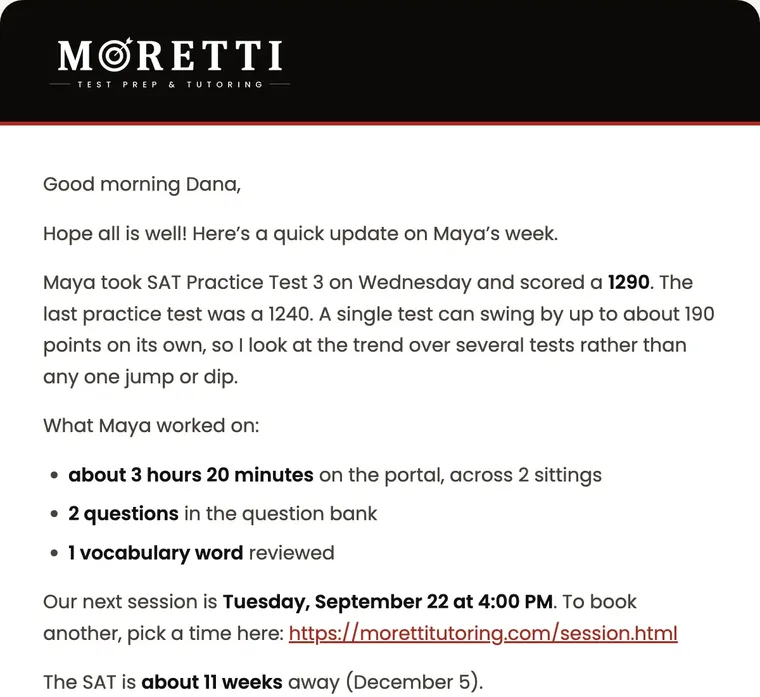
After every session, an email from me: what we worked on, what to practice before the next one, and when the next session is.

A weekly update email to a parent: what the student worked on in the session, what to practice next and the next session

It starts with finding the gap

Same grade, two different curriculums.

The visible problem is this week’s chapter. The real one is usually a year or two back: fractions under the quadratics, exponent rules under the logs. The first sessions find it. For students who need it, I then build a full curriculum around them, with the lessons, the practice and their order set by their own tests and homework, and it adapts every week to how fast they are actually moving.

  • Built around your student. Lessons and practice written for their gaps, on top of their own course and textbook.
  • Adaptive. Every session shows what held and what didn’t, and the next week is rebuilt from it.
  • At their pace. Slower where the foundation needs it, faster where it is solid, and ahead of the class when they are ready.
  • Checked every month. A written report on what improved, what is next and how the grade is tracking.
Two students, a B− in Algebra 2the first 8 weeks

Quadratics were the visible problem. The recent tests showed fraction operations and negative exponents underneath them.

Wk 1Wk 2Wk 3Wk 4Wk 5Wk 6Wk 7Wk 8
  • Wk 1–3Exponent rules and fractions
  • Wk 4–5Back to quadratics
  • Wk 6–8Current chapter, on pace

The Algebra 2 material was solid. The lost points were sign slips and pace under test conditions.

Wk 1Wk 2Wk 3Wk 4Wk 5Wk 6Wk 7Wk 8
  • Wk 1–2Error-checking habits
  • Wk 3–5Timed problem sets
  • Wk 6–8Ahead of the class, into precalculus

A gap underneath. Three weeks below the chapter, then back up to it. An illustration, not a real student.

A gap in habits. Nothing to relearn, so the weeks go to accuracy and pace, then ahead. An illustration, not a real student.

Every course, Algebra 1 to college math.

Thirteen courses, all taught by me. Tap any one to see what it covers.

Every course I teach · 13 courses, all one-on-one
The core sequence4 courses
→ → →
Calculus2 courses
→
College mathematics3 courses
Statistics2 courses
IB Mathematics2 courses

And everything else.

Direct line

Text me.

Stuck before the next session? I answer the same day: (201) 275‑2791.

Progress reports

A written report every month.

What improved, what is next and how the grade is tracking.

Shared files

Everything in one folder.

Notes, worksheets and past work I share, in one Google Drive folder.

Your textbook

Built on their actual course.

The plan follows the class, the teacher’s tests and the book, not a generic program.

Where we meet

Online or in Cranford.

Online from anywhere, or in person at the Cranford Public Library. Same plan either way.

Questions

What parents usually ask.

Do you meet in person or online?
Both. Online sessions run anywhere in the country, using the same materials and the same portal as in-person students. In-person sessions are held at the Cranford Public Library in Cranford, New Jersey. Most families outside New Jersey work with us entirely online.
What math courses do you cover?
Algebra 1, Geometry, Algebra 2/Trigonometry, Precalculus, AP Calculus AB & BC, Multivariable Calculus, Differential Equations, Linear Algebra, Statistics and AP Statistics, and IB Mathematics (AA and AI) at SL and HL.
How is this different from generic homework help?
Homework help treats the symptom. We find the gap underneath it, and the plan fixes that first, so the new material finally sticks instead of sitting on top of a shaky foundation.
Is this only for students who are struggling?
No. Strong students use the program to get ahead of the classroom's pace and stay there. The plan comes from where the student actually is, behind or ahead.
Who does the teaching?
Luca. Every session, every week. There are no handoffs to junior tutors and no rotating staff. I write the plan and I sit with your student every week.
How long is each session?
Sessions run 60–90 minutes depending on the course and where your student is, scheduled weekly or twice a week at a consistent time.
Is there a minimum commitment?
No. Sessions are billed by the hour, individually or from a prepaid pack, and you can stop whenever you like; the terms explain how unused pack hours are refunded. Most families keep going through the school year, since math builds on itself, and every month you get a written report on where things stand, so the decision to continue is an informed one.
How much does tutoring cost?
Families come to me with very different arrangements: one or two sessions a week, a single hard course or a year-long catch-up, a student getting ahead rather than catching up, siblings together. One posted number would be wrong for most of them, so after our first conversation I give you a recommended plan and the cost in writing, before the first session. Sessions are billed by the hour, individually or from a prepaid pack, and you are never committed beyond what you have paid for. Packs are prepaid hours that stay good for six months, and hours still unused after that expire. If tutoring ends early, ask for a refund before then: the unused hours come back, and the hours already used are charged at the single-session rate. The full payment terms, including the late fee, are in the terms. The first call costs nothing either way.

Testimonials

From families who’ve done it.

C to an A in math
“My daughter has gone from a C to an A grade student in math. She now feels confident in math and proud of her accomplishments.”
Patti M., parent
D to a B in college math
“I went from a student who was barely passing with a D to someone who actually enjoys math, and finished my finals with a B.”
A student
Patient, kind, and available
“He is very patient, kind, and was even available to answer questions on text after a session.”
Sharon A., parent

Read every review →

Book a free call.

Fifteen minutes on your student, the course and the goal, free.

1A free 15-minute callWe talk about your student, the course and where it is getting hard.
2Finding the gapThe first sessions find where the foundation broke, and the plan starts there.
3Weekly sessionsOne-on-one with me, with a written report every month.